

Into the Hedge: Exploring the Magical World of Skye McKenna’s ‘Hedgewitch’
An exclusive author Q&A with Skye on folklore, nature, and the liminal spaces between worlds.

Hello there,
If you’re new here, a very warm welcome to you. I’m Emma, an artist and illustrator, based in rural England and my work is influenced by wildlife, stories and those small but significant, moments of connection with nature.
The Creative Flock is a welcoming space where I share insights into my life as a full-time creative as well as the everyday moments that inspire my work. In the membership, I provide inspirational content, practical advice as well as lots of encouragement to help to support you on your creative journey.
This month’s theme is all about hedgerows, and I wanted to share a special children’s book with the magic of British nature and folklore at its heart.
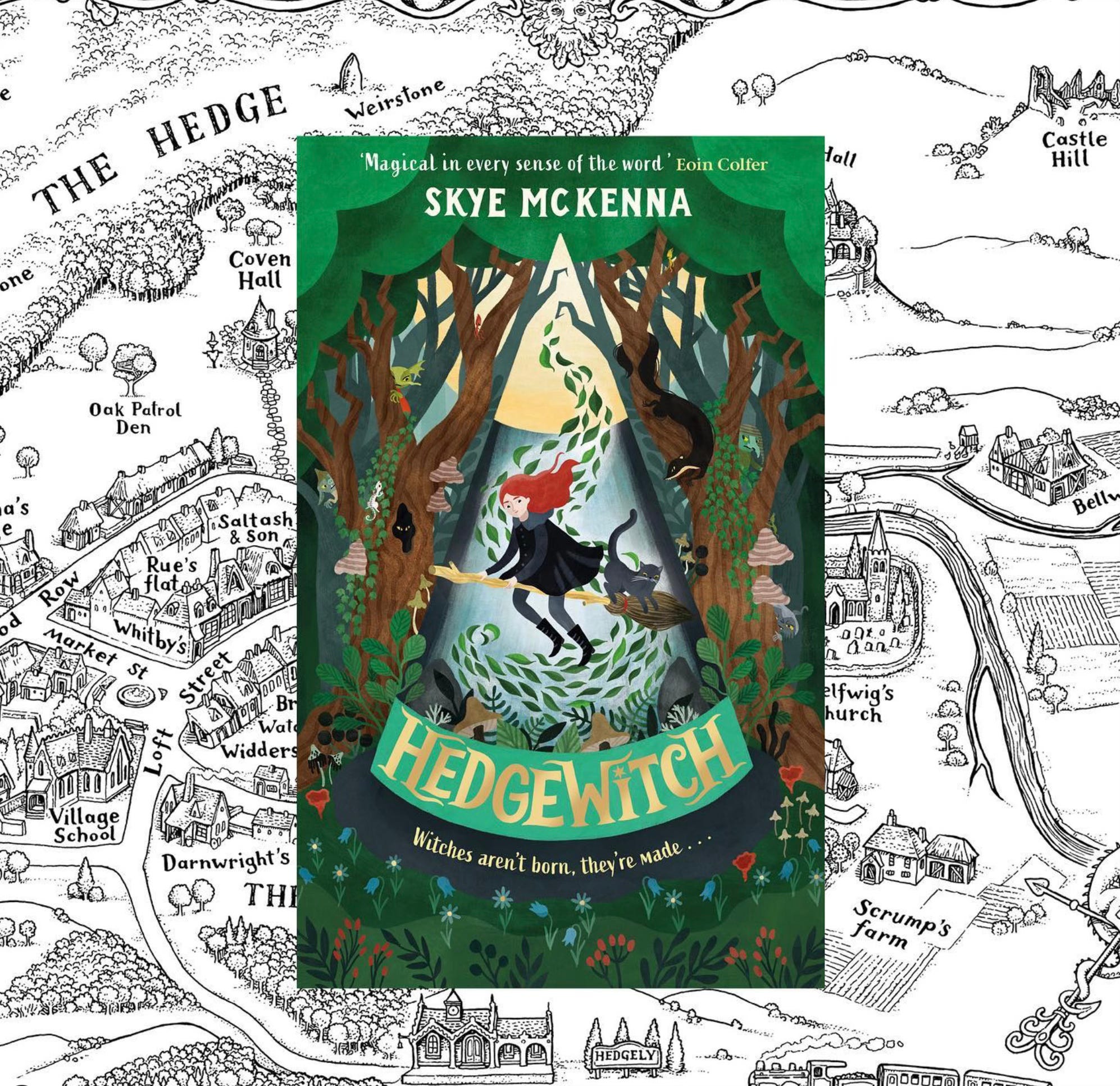
Hedgewitch by Skye McKenna is the first in a magical fantasy series and features Cassie, a resourceful young girl who is determined to escape the dreary English boarding school where she has been confined. She longs to search for her mother, who left her at the school when she was very young and never returned.
One day, Cassie takes matters into her own hands, crossing the forbidden border between England and the faerie realm. Convinced that her mother is somewhere beyond the hedge, she ventures into the magical world and its dangers, determined to uncover the truth behind her mother’s disappearance.
A fantasy adventure for ages 9+ full of folklore, natural magic and resourceful young witches!
The Hedge is such a powerful presence in your story, both as a place and a boundary. What inspired the idea of a magical forest acting as a border between England and Faerie?
I’ve been fascinated by hedgerows ever since I came to Britain. Hedges are living walls and miniature worlds. They allow an amazing biodiversity to exist alongside agriculture and form green corridors for wildlife to flourish. The ancient woods we have left here in Britain serve a similar role for wildlife, but I think they are also the places we go – as children and adults – to find wonder and enchantment. Walking through a forest, even a small one, always feels like a transition from the human world into one where we are not entirely in control of our surroundings. As trees obscure the horizon, it is possible to lose your way, and in the twilight our imaginations begin to people the shadows with goblins and elves. I felt that the border between our world and the magical land of Faerie would be equally mysterious and alive.
Nature and the landscape feel like living, breathing characters in Hedgewitch. How did your own experiences with nature influence how you created the world of Hedgely and the Hedge?
When you move to a new country, particularly one with a vastly different landscape, it gives you the chance at a second childhood. I already had ideas about robins, oaks and bluebells from the British books I had grown up reading, but when I settled here everything was still fresh and new to me. I made it my mission to learn the names of every bird, plant and tree I encountered, and I poured all my curiosity about the natural world, and my early encounters with it into Hedgewitch. The protagonist, Cassie, is a city child, so when she moves to the rural village of Hedgely she sees the green world around her as both wonderful and slightly threatening. Witchcraft, in my books, requires a great deal of natural history and herbal knowledge, so she is soon identifying fungi and seeking out rare and magical wildflowers in the Hedge.
Folklore is woven into the narrative. Were there specific myths, legends, or traditions that directly inspired elements of the book?
For me, folklore is something deeply rooted in landscape, so the faery creatures in my books all come from British (and a few Irish) stories and folk tales. In these older stories, fairies are often amoral and mischievous, as likely to harm you as help you. For the history of Cassie’s Britain, which is a little different to our own, I went back to the medieval literature I studied at university and especially the magical women of the Arthurian stories. One thing I changed, however, was the witch trials. I wanted to imagine a world in which women had always been celebrated and respected for their magical skills, rather than persecuted. The magic itself also draws on traditional folklore around the uses of various plants, stones and natural elements – which goes right back to the Middle Ages and the idea of ‘natural magic’.
Talking cats, flying brooms, ancient forests - your storytelling is rich with classic fantasy elements. How did you strike the balance between honouring traditional folklore and creating something fresh for modern readers?
Fantasy tropes always feel fresh when invested with a genuine passion and complete suspension of disbelief on behalf of the writer. Personally, I put less emphasis on appearing original or twisting the existing tales than imbuing them sense of their own inherent power. These archetypes survive for a reason – because they are deeply satisfying and culturally significant. I would rather my fantasy feel ‘real’ than clever, and so I try to approach it with the same sort of wonder and enchantment I felt the first time I read a book about witches or faeries.
In Hedgely, community and apprenticeship are vital to Cassie’s growth. Did you draw on any real-world traditions of hedgecraft or folk magic when shaping the witching community?
Although I love ‘magic school’ books, particularly the Worst Witch series by Jill Murphy, I knew from the start that I wanted the witchcraft in Cassie’s world to be practical and out-of-doors. Thankfully, the Guides and Scouts movements, which I was involved with as a child, gave me a model to draw on. Cassie and her friends attend Coven every Friday after school, where they work as patrols and earn badges for magical first aid, chanting and potion brewing. They also learn that the purpose of witchcraft is to support their communities; offering healing, protection and help with tricksy faeries. The village of Hedgely has many traditions around the dangerous Crossing Nights: Midsummer, Midwinter, May Eve and Hallowe’en. I drew on old customs and festivals for these events, and shaped them to the magical needs of Cassie’s community.
The hedge itself represents a liminal space, a threshold between worlds. What fascinates you about borders, thresholds, and the unknown in storytelling?
I love stories about magical portals and borders, but usually our heroes cross them pretty quickly and have all of their adventures on the other side. I wanted to know what it was like to live on our side of the border, with the ever-present threat of something dangerous coming through, and the wonder of what exists just beyond the threshold. Setting Hedgewitch on the British side of the Hedge allowed me to balance the strange with the familiar, the frightening with the comforting, and I find that duality very satisfying. Thresholds are a wonderful tool for writers of any genre, they allow us to explore otherness and question everything we take for granted.
If you could walk the Hedge yourself, what would you hope to find, or perhaps, what would you be most wary of?
As the Hedge partly came out of a longing for all the ancient woodland we have lost over the centuries, I am particularly drawn to the vastness of it. I would pack plenty of supplies for my expedition, and set out in the hope of discovering new secrets deep within the woods. In Woodwitch (book 2 in the series), Cassie and her friends meet a woodwose named Lailoken. I would love to meet him to and have birch sap and nettle biscuits in his cave. I would be wary of the dangerous wood wives though, as beautiful and inticing as they are!
Finally, can you reveal the details of any new books you’re working on?
I'm currently working on Stonewitch, the fourth book in the Hedgewitch series, which will be published in the UK on September 25th 2025. Stonewitch follows Cassie and her friends as they travel to Scotland to attend the Covenmoot - a meeting of covens from all over the UK.
Thank you to Skye for taking part in this interview!

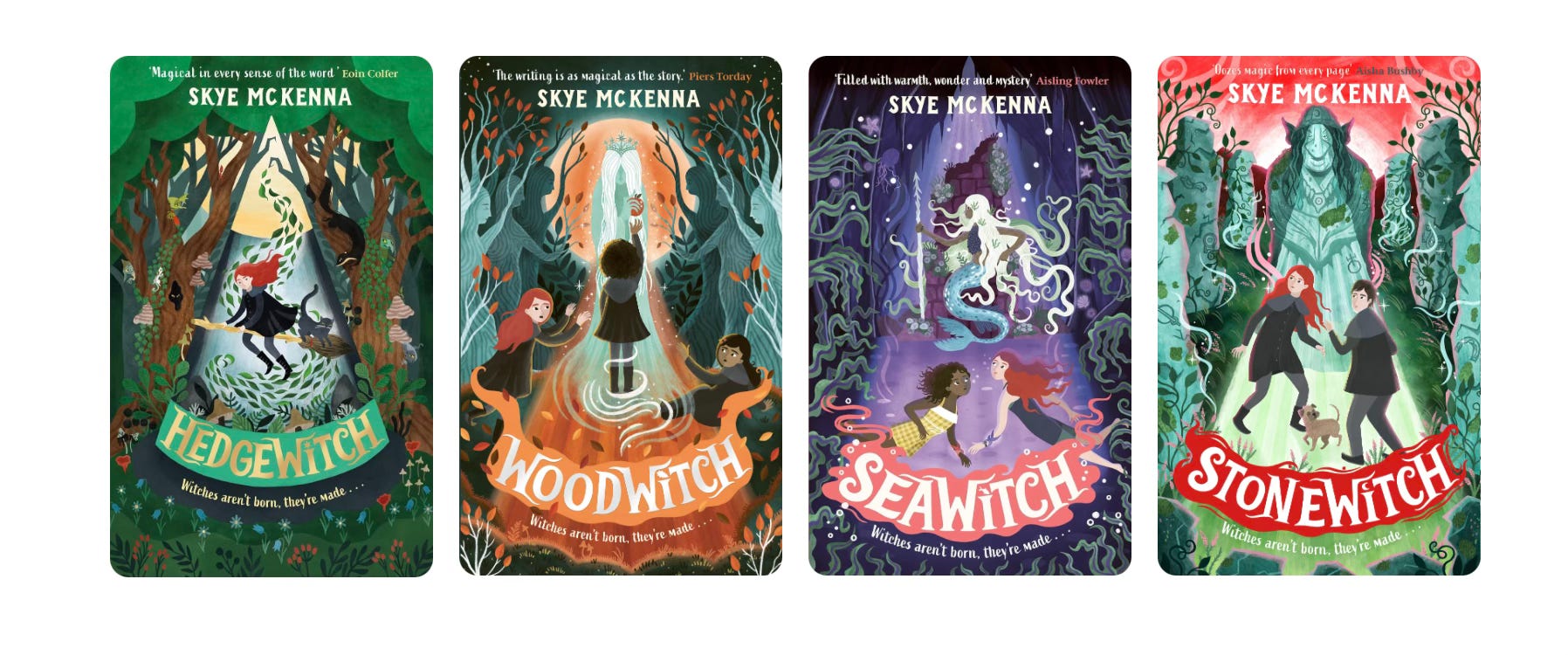
There are now three books in the Hedgewitch series and Stonewitch is available to pre-order, here’s where you can buy them:
In the UK: Bookshop.org
US/International: Waterstones.com
Discover more about Hedgewitch on the Hachette website: hachette.co.uk/skye-mckenna/hedgewitch
And find out more about Skye, her work and the other books in her series on her website: https://skyemckenna.com
This month’s live sessions for Creative Flock members:
If you’d like to access these live sessions and the full archive of recordings, you can upgrade your subscription at any time.
Drawing session: Thursday 24th April, 7.30-9pm BST. Replay available.
This session will be inspired by the rich forms and textures of hedgerows and the variety of wildlife commonly found in these habitats.
NEW: Project Show & Share. Tuesday 29th April, 7pm BST. Replay available.
I’m trialling out this new addition for Creative Flock members and if it’s popular then it’ll be a regular session.
Bring your creative project and share it in a supportive space! This is a great opportunity to receive feedback, ask questions, and connect with fellow artists and creatives. I truly believe that sharing our work with peers helps us grow and evolve. You’re welcome to bring something inspired by this month’s theme or any project you’d like to share with the group. Or just come along and see what others are sharing!
More details on this session will follow in a separate post, for now, sign up via the link on the Calendar Page.

I think I met Skye at a picnic in Edinburgh 2 years ago! Her work looks amazing!!
Right up my reading alley! Thank you for featuring Skye McKenna and her books.